
General
How to Read a Football Formation in 60 Seconds
Published May 17, 2026
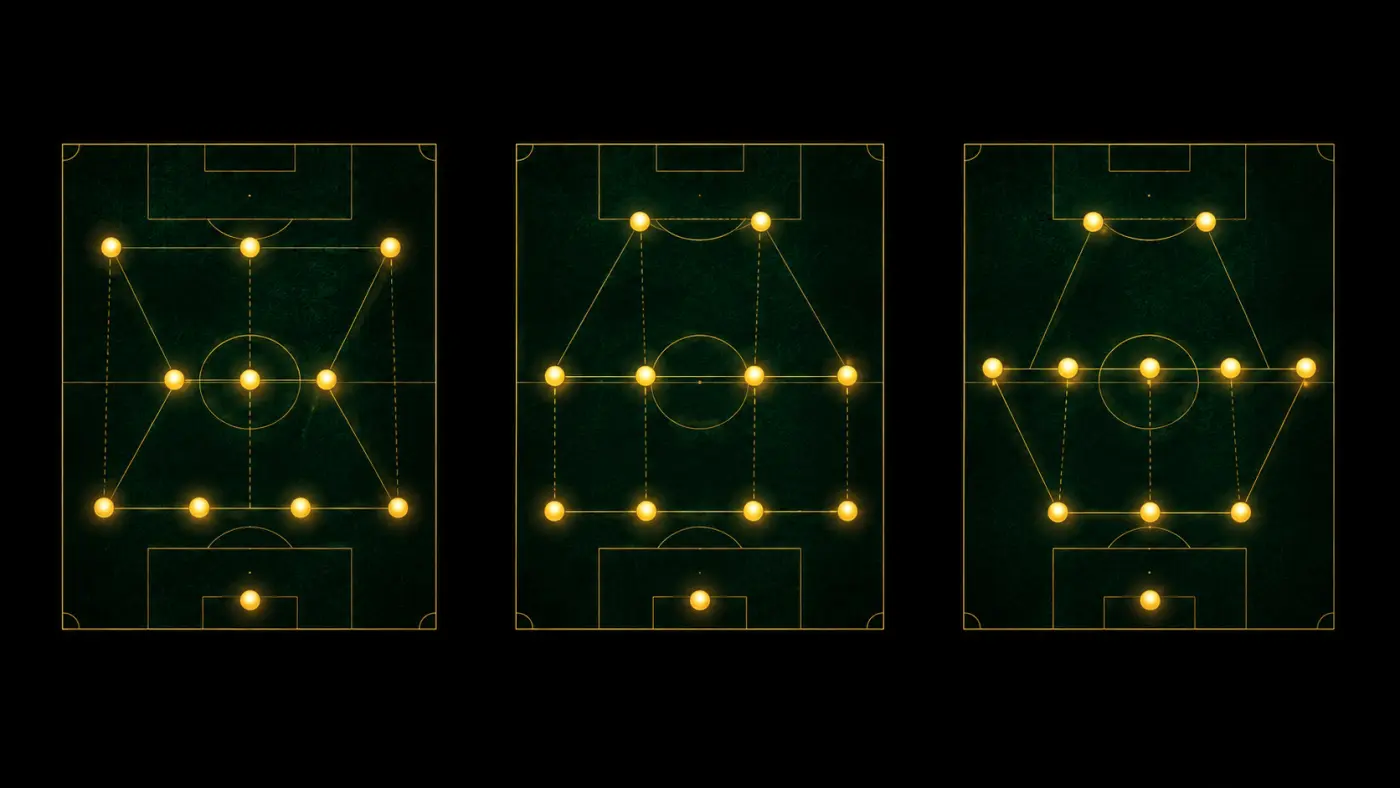
You see eleven dots on a pitch. You have one minute. Which team are you looking at? This guide is the fastest way to get from a blank screen to a confident guess. Three steps, ten common patterns, a couple of tricks for the formations that try to confuse you.
Why reading formations matters
Anyone can count to eleven. Reading a formation means seeing the shape on the pitch as a team's identity. A 4-4-2 doesn't only mean four defenders, four midfielders, two strikers. It means a structured, English-style approach with two banks defending and two strikers chasing balls in behind. Once you train your eye, you stop counting and start recognizing. That's the skill.
Football has produced maybe twenty important formations across its history. You only need to know about ten to handle ninety percent of what you'll see. The rest are variations.
Practice on Real Formations
Tashkeela shows you legendary teams as pure formation dots. Guess the team. Free on iOS and Android.


Step 1: Count the back line
Always start at the back. Find the goalkeeper, then count the line of defenders right in front of him. There are only three numbers you'll ever see:
- Three at the back. The middle defender is usually the playmaker or the libero. Common in Italian football, in Conte's teams, and in Cruyff-influenced sides.
- Four at the back. The default since the 1970s. Two center backs, two fullbacks. Almost every team you'll see plays this.
- Five at the back. Almost always a back three plus two wing-backs that dropped deep. If the wide players look like they're standing on the same line as the center backs, it's a five.
That single count narrows your guess. A back three with wing-backs is almost never Premier League pre-2015. A flat back four is almost never the Cruyff-era Barcelona team.
Step 2: Find the midfield triangle
Now look at the middle of the pitch. Count the midfielders and notice the shape they make with each other. There are three patterns:
- Flat line of four. Classic 4-4-2. The midfielders are roughly on the same horizontal line. English football, especially before 2010.
- Triangle of three. Either one deep and two ahead (4-3-3 in the Guardiola style) or one high and two deep (4-3-3 in the Klopp style). The position of the apex tells you everything.
- Diamond or box of four. 4-4-2 diamond or 4-2-2-2. Less common, but a strong tell. If you see a clear diamond shape, you're looking at an Italian-influenced setup.
The shape of the midfield is usually the most useful piece of information on the pitch. Coaches design midfields. The shape is their signature.
Step 3: Read the front line
Last, count the forwards. Same three numbers again:
- One striker alone. Means a 4-2-3-1, 4-5-1, or 4-1-4-1. Defensive-leaning setups, common in away matches and in pragmatic managers' lineups.
- Two strikers. Either traditional 4-4-2 or a 3-5-2. The number of defenders behind tells you which.
- Three forwards. The 4-3-3 family, plus 3-4-3 and 5-2-3 variations. If the front three are spread wide, it's the modern attacking shape. If they're tight together, look for a false nine.
For a deeper dive on the most common variation, see our guide to what a 4-3-3 actually does.
Practice on Real Formations
Tashkeela shows you legendary teams as pure formation dots. Guess the team. Free on iOS and Android.
The ten formations you'll see most often
Here are the shapes that show up in nearly every Tashkeela question and on every televised match. Memorize the look of each one, not the number.
- 4-4-2. Two banks of four, two strikers up top. The English default. Atletico under Simeone, Leicester under Ranieri.
- 4-3-3. Four at the back, a midfield triangle, three forwards. Pep's Barcelona, Klopp's Liverpool.
- 4-2-3-1. Four at the back, two holding midfielders, three attacking midfielders, one striker. Mourinho's Real Madrid, German national team around 2014.
- 3-5-2. Three center backs, two wing-backs, three central midfielders, two strikers. Conte's signature.
- 3-4-3. Three at the back, four in midfield, three forwards. Chelsea under Tuchel, Brazilian national teams.
- 4-4-2 diamond. Four at the back, midfield diamond with one deep and one attacking number ten, two strikers. Carlo Ancelotti's signature shape at AC Milan.
- 4-1-4-1. Four defenders, one anchor, four midfielders, one striker. Tony Pulis-era English mid-table teams.
- 5-3-2. A deep, defensive version of 3-5-2 where the wing-backs drop into a back five. Atalanta when defending leads.
- 4-3-2-1. Christmas tree. Two attacking midfielders behind a striker, deep midfield triangle. Carlo Ancelotti's AC Milan in the mid-2000s.
- 4-2-4. Old Brazilian formation. Two fullbacks, two center backs, two midfielders, two wingers, two strikers. Pelé's 1958 World Cup Brazil. Rare today.
Tells for the formations that try to fool you
Some shapes look like one thing on paper and play like another. Here's what to look for.
- False nine. The striker drops into midfield while the wingers cut in. On a static formation diagram, this looks like a 4-3-3 where the central forward is one row deeper than the wide forwards. If you see that staggered front three, think Pep's Barcelona or Roberto Firmino's Liverpool.
- Inverted fullbacks. The fullbacks tuck inside next to the holding midfielder. Looks like a 3-2-5 in possession. Joao Cancelo and Kyle Walker for Manchester City.
- Asymmetric shapes. Some teams play 4-3-3 on one side and 4-4-2 on the other. The left winger drops, the right winger stays high. Pep does this. So does Mikel Arteta.
- Sweeper-keeper. The goalkeeper plays as an extra defender. Manuel Neuer for Bayern, Ederson for City. You can't always see this on a formation diagram, but a high keeper position is a strong tell about the era.
If you want to go deeper on what formations communicate about a manager's philosophy, our piece on what a formation tells you about a team covers it.
How to practice
The only way to get faster at this is repetition. Watch the first ten minutes of any match and try to identify the shape of both teams before the commentators say it. You'll be wrong a lot at first. That's normal.
If you don't have time to watch full matches, Tashkeela does this for you in a quiz format. Each question is a real legendary lineup shown as pure formation dots. No badges, no shirt numbers, no faces. You guess the team. The hint system is built around the same three steps in this guide: shape, era, nationality.
After fifty or so questions, you'll find that you stop counting dots and start seeing teams. That's when you've actually learned to read formations.
Practice on Real Formations
Tashkeela shows you legendary teams as pure formation dots. Guess the team. Free on iOS and Android.
One trick that helps
If you're stuck, ignore the numbers and focus on one thing: where is the deepest midfielder standing? If they're right in front of the back line and alone, you're looking at a 4-3-3 or a 4-1-4-1. If they're slightly higher and there are two of them, it's a 4-2-3-1 or a double pivot. If there's no deep midfielder visible at all, you're looking at a 4-4-2 or a 3-5-2 where the holding role is shared.
The deep midfielder is the single most useful dot on the pitch when you're learning to read formations. Find them first and the rest of the shape falls into place around them.
New to the app? Start with the beginner walkthrough. Then come back here, run through this guide once more, and you'll have everything you need.
كيف تقرأ تشكيلة كرة قدم في 60 ثانية
ترى إحدى عشرة نقطة على الملعب. أمامك دقيقة واحدة. أيّ فريق تنظر إليه؟ هذا الدليل هو أسرع طريقة للانتقال من شاشة فارغة إلى تخمين واثق. ثلاث خطوات، عشرة أنماط شائعة، وحيلتان لبعض التشكيلات التي تحاول إرباكك.
لماذا قراءة التشكيلة مهمّة
أيّ شخص يستطيع العدّ إلى أحد عشر. قراءة التشكيلة تعني أن ترى الشكل على الملعب كهوية الفريق. التشكيلة 4-4-2 ليست فقط أربعة مدافعين وأربعة لاعبي وسط ومهاجمَين. هي أسلوب إنجليزي منظّم مع خطّين دفاعيَّين ومهاجمَين يطاردان الكرات الطويلة. حين تتدرّب عينك، تتوقّف عن العدّ وتبدأ بالتعرّف. هذه هي المهارة.
أنتجت كرة القدم عشرين تشكيلة مهمّة تقريبًا عبر تاريخها. تحتاج معرفة عشرة منها فقط لتتعامل مع تسعين بالمئة ممّا ستراه. الباقي مجرّد تنويعات.
تدرّب على تشكيلات حقيقية
تشكيلة تعرض الفرق الأسطورية كنقاط تشكيلة فقط. خمّن الفريق. مجانًا على iOS وأندرويد.
الخطوة 1: عُدّ خط الدفاع
ابدأ دائمًا من الخلف. ابحث عن الحارس، ثم عُدّ صفّ المدافعين أمامه مباشرةً. هناك ثلاثة أرقام فقط ستراها:
- ثلاثة في الخلف. المدافع الأوسط عادةً صانع لعب أو ليبيرو. شائع في الكرة الإيطالية، وفي فرق كونتي، والفرق المتأثّرة بكرويف.
- أربعة في الخلف. الخيار الافتراضي منذ السبعينيات. قلبا دفاع وظهيران. تقريبًا كل فريق ستراه يلعب هكذا.
- خمسة في الخلف. دائمًا تقريبًا ثلاثي دفاعي مع ظهيرَين جناحَين تراجعا عميقًا. إذا بدا اللاعبان الطرفيّان على نفس الخط مع قلبَي الدفاع، فهو خماسي.
هذا العدّ وحده يضيّق تخمينك. ثلاثي دفاعي مع جناحَين ليس بريميرليج قبل 2015. خط دفاع رباعي مسطّح ليس برشلونة حقبة كرويف.
الخطوة 2: ابحث عن مثلّث الوسط
الآن انظر إلى وسط الملعب. عُدّ لاعبي الوسط ولاحظ الشكل الذي يصنعونه. هناك ثلاثة أنماط:
- خط مسطّح من أربعة. 4-4-2 الكلاسيكية. لاعبو الوسط على نفس الخط الأفقي تقريبًا. الكرة الإنجليزية، خاصّة قبل 2010.
- مثلّث من ثلاثة. إمّا واحد متأخّر واثنان أمامه (4-3-3 على طريقة جوارديولا) أو واحد أعلى واثنان خلفه (4-3-3 على طريقة كلوب). موقع رأس المثلّث يخبرك بكل شيء.
- معيّن أو مربّع من أربعة. 4-4-2 ماسية أو 4-2-2-2. أقلّ شيوعًا، لكن دليل قوي. إذا رأيت معيّنًا واضحًا، فأنت تنظر إلى نسق إيطالي.
شكل خط الوسط عادةً هو أهمّ معلومة على الملعب. المدرّبون يصمّمون خط الوسط. الشكل هو توقيعهم.
الخطوة 3: اقرأ خط الهجوم
أخيرًا، عُدّ المهاجمين. نفس الأرقام الثلاثة:
- مهاجم وحيد. يعني 4-2-3-1 أو 4-5-1 أو 4-1-4-1. أنساق دفاعية، شائعة في مباريات الذهاب والإياب وفي تشكيلات المدرّبين العمليّين.
- مهاجمان. إمّا 4-4-2 تقليدية أو 3-5-2. عدد المدافعين خلفهما يخبرك بالأيّ.
- ثلاثة مهاجمين. عائلة 4-3-3، مع تنويعات 3-4-3 و 5-2-3. إذا كان الثلاثي الأمامي متباعدًا بشكل عريض، فهو الشكل الهجومي الحديث. إذا كانوا متقاربين، ابحث عن مهاجم وهمي.
للتعمّق في التنويعة الأكثر شيوعًا، اقرأ دليلنا عن ما تفعله التشكيلة 4-3-3 فعلًا.
تدرّب على تشكيلات حقيقية
تشكيلة تعرض الفرق الأسطورية كنقاط تشكيلة فقط. خمّن الفريق. مجانًا على iOS وأندرويد.
التشكيلات العشر التي ستراها أكثر
هذه هي الأشكال التي تظهر في كل سؤال تقريبًا في تشكيلة وفي كل مباراة متلفزة. احفظ شكل كلّ واحدة، لا أرقامها.
- 4-4-2. خطّان من أربعة، مهاجمان في الأعلى. الخيار الافتراضي الإنجليزي. أتلتيكو سيميوني، ليستر رانييري.
- 4-3-3. أربعة في الخلف، مثلّث وسط، ثلاثة مهاجمين. برشلونة جوارديولا، ليفربول كلوب.
- 4-2-3-1. أربعة في الخلف، مرتكزان، ثلاثة لاعبي وسط هجومي، مهاجم وحيد. ريال مدريد مورينيو، منتخب ألمانيا 2014.
- 3-5-2. ثلاثة قلوب دفاع، ظهيران جناحان، ثلاثة لاعبي وسط، مهاجمان. توقيع كونتي.
- 3-4-3. ثلاثة في الخلف، أربعة في الوسط، ثلاثة مهاجمين. تشيلسي توخيل، المنتخبات البرازيلية.
- 4-4-2 ماسية. أربعة في الخلف، معيّن وسط مع مرتكز وصانع لعب هجومي، مهاجمان. توقيع كارلو أنشيلوتي مع ميلان.
- 4-1-4-1. أربعة مدافعين، مرتكز، أربعة لاعبي وسط، مهاجم. فرق منتصف الجدول الإنجليزية في حقبة توني بوليس.
- 5-3-2. نسخة دفاعية عميقة من 3-5-2 حيث يتراجع الظهيران إلى خط دفاع خماسي. أتالانتا عند الحفاظ على التقدّم.
- 4-3-2-1. شجرة الكريسماس. صانعا لعب خلف مهاجم، مثلّث وسط متأخّر. ميلان أنشيلوتي في منتصف الألفينيات.
- 4-2-4. التشكيلة البرازيلية القديمة. ظهيران، قلبا دفاع، لاعبا وسط، جناحان، مهاجمان. منتخب البرازيل لكأس العالم 1958 مع بيليه. نادرة اليوم.
دلائل التشكيلات التي تحاول إرباكك
بعض الأشكال تبدو على الورق شيئًا وتلعب شيئًا آخر. إليك ما تبحث عنه.
- المهاجم الوهمي. المهاجم ينزل إلى الوسط بينما الجناحان يقطعان للداخل. على مخطّط تشكيلة ثابت، يبدو كـ 4-3-3 حيث المهاجم الأوسط أعمق بصفّ من الجناحَين. إذا رأيت هذا الثلاثي المتدرّج، فكّر في برشلونة جوارديولا أو فيرمينو مع ليفربول كلوب.
- الظهيران العكسيّان. الظهيران يتمركزان داخليًا بجوار المرتكز. يبدو كـ 3-2-5 في الاستحواذ. كانسيلو وووكر مع مانشستر سيتي.
- الأشكال غير المتناظرة. بعض الفرق تلعب 4-3-3 على جهة و 4-4-2 على الأخرى. الجناح الأيسر يتراجع، والأيمن يبقى عاليًا. جوارديولا يفعل هذا. وكذلك ميكيل أرتيتا.
- حارس الكنّاس. الحارس يلعب كمدافع إضافي. نوير مع بايرن، إيديرسون مع السيتي. لا ترى هذا دائمًا في مخطّط التشكيلة، لكنّ موقع الحارس العالي دليل قوي عن الحقبة.
إذا أردت التعمّق فيما تخبرك به التشكيلة عن فلسفة المدرّب، مقالنا ماذا تخبرك التشكيلة عن الفريق يغطّي ذلك.
كيف تتدرّب
الطريقة الوحيدة لتصبح أسرع هي التكرار. شاهد أول عشر دقائق من أيّ مباراة وحاول التعرّف على شكل الفريقَين قبل أن يذكره المعلّقون. ستخطئ كثيرًا في البداية. هذا طبيعي.
إذا لم يكن لديك وقت لمشاهدة مباريات كاملة، تشكيلة تفعل هذا لك في شكل كويز. كل سؤال هو تشكيلة أسطورية حقيقية معروضة كنقاط فقط. بلا شعارات، بلا أرقام، بلا وجوه. تخمّن الفريق. نظام التلميحات مبني على نفس الخطوات الثلاث في هذا الدليل: الشكل، الحقبة، الجنسية.
بعد خمسين سؤالاً تقريبًا، ستجد أنّك توقّفت عن عدّ النقاط وبدأت ترى فرقًا. هذه هي اللحظة التي تعلّمت فيها فعلًا قراءة التشكيلات.
تدرّب على تشكيلات حقيقية
تشكيلة تعرض الفرق الأسطورية كنقاط تشكيلة فقط. خمّن الفريق. مجانًا على iOS وأندرويد.
حيلة واحدة تساعد
إذا علقت، تجاهل الأرقام وركّز على شيء واحد: أين يقف اللاعب الأعمق في الوسط؟ إذا كان أمام خط الدفاع مباشرةً ووحده، فأنت تنظر إلى 4-3-3 أو 4-1-4-1. إذا كان أعلى قليلاً وكانا اثنَين، فهي 4-2-3-1 أو محور مزدوج. إذا لم يكن هناك لاعب وسط عميق ظاهر، فأنت تنظر إلى 4-4-2 أو 3-5-2 حيث الدور الدفاعي موزّع.
اللاعب الأعمق في الوسط هو أهمّ نقطة على الملعب حين تتعلّم قراءة التشكيلات. ابحث عنه أوّلًا وكل الشكل يقع في مكانه حوله.
جديد على اللعبة؟ ابدأ بـدليل المبتدئين. ثم عُد إلى هنا، اقرأ هذا الدليل مرّة أخرى، وستملك كل ما تحتاجه.